
Vintage Wood Molding Planes – History, Types, Features, Restoration & Collector Value Guide
1. Introduction

Vintage wood molding planes are some of the most beautiful and functional tools in traditional woodworking. Wooden molding planes were used before powered shapers and router bits existed. They created every decorative panel, casing, bead, ogee, and architectural profile. Each plane was designed to cut a specific, repeatable shape.


These planes were crafted from beech, boxwood, maple, and exotic hardwoods. They were fitted with hand-forged irons. They were essential tools for cabinetmakers, joiners, carpenters, and sash makers. Today they remain beloved for their elegant forms, hand-cut results, and rich history.
This article provides a complete overview of Vintage Wood Molding Planes.
2. History of Vintage Wood Molding Planes
Wood molding planes have been used for centuries and represent one of the oldest categories of specialty woodworking tools.

Historical Highlights
- Early molding planes date back to antiquity and evolved significantly during the Renaissance
- By the 1700s–1800s, molding planes were essential for furniture and architectural woodworking
- American and English makers standardized shapes and profile numbering systems
- Massive sets of hollows and rounds were produced to handle every molding curvature
- Specialized trades—coopers, sash makers, joiners—used unique molding plane profiles
- Industrialization introduced complex “combination planes,” but wooden molding planes remained dominant
- Usage declined only after powered shapers and router bits emerged in the mid-20th century
Today, molding planes are cherished for their craftsmanship and unmatched ability to produce clean, hand-cut profiles.
3. Major Manufacturers of Vintage Wood Molding Planes
American Makers
- Sandusky Tool Co. – Renowned for high-end profiles, often made with boxwood
- Ohio Tool Co. – Large production of both standard and complex molders
- Auburn Tool Co. – Known for consistent quality and durable beech bodies
- Greenfield Tool Co. – Produced a wide variety of profiles
- L.&I.J. White – High-quality molding planes, especially for cooperage and timber work
English Makers
- Mathieson – One of the finest producers of molding planes
- Marples
- Moseley
- Gabriel & Moon (early makers)
European Makers
- Ulmia
- E.C.E. (Emmerich)
- Specialized in later-period German-style planes
User-Made Planes
- Many molding planes were handmade by tradesmen
- Signed examples can be highly collectible
These makers produced molding planes with exceptional craftsmanship and precision.

4. Design and Features of Vintage Wood Molding Planes
Vintage molding planes were designed to create clean, crisp profiles with remarkable efficiency.
Common Materials
- Beech – most common body wood
- Boxwood – premium material for wear strips and high-end planes
- Maple – durable and stable
- Hornbeam – used in some European designs
- Hand-forged steel irons – often laminated
Types of Vintage Wood Molding Planes
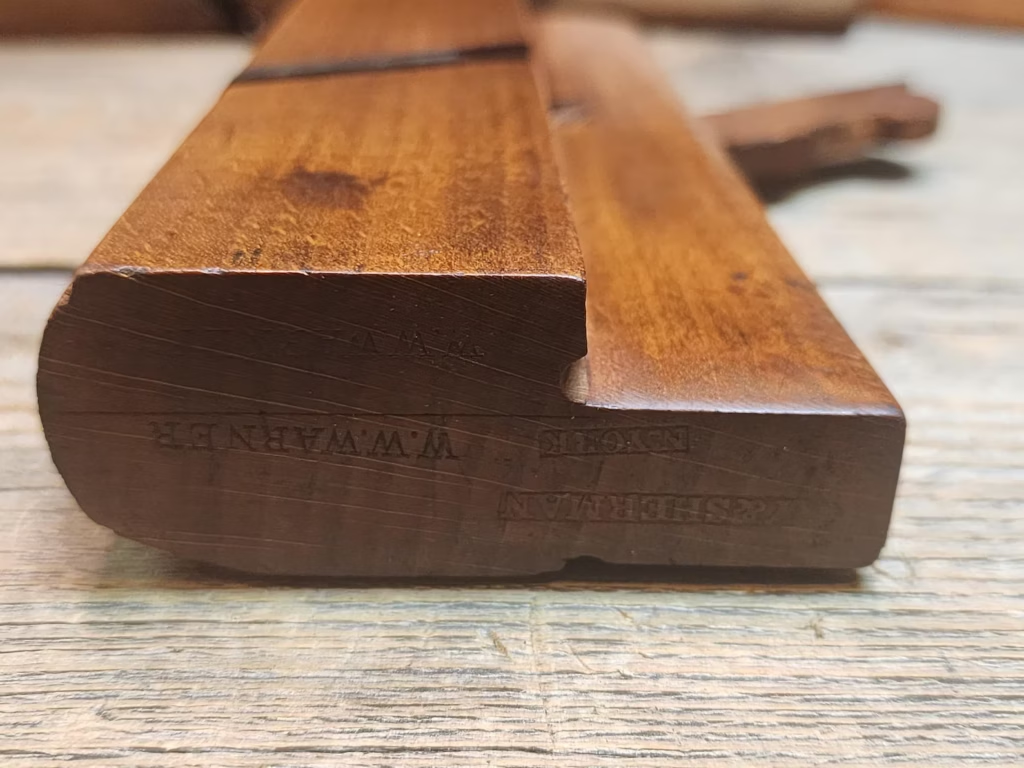
1. Hollows and Rounds
- The foundation of all molding work
- Hollows cut concave shapes; rounds cut convex shapes
- Sold in pairs or complete sets (No. 1–18 or higher)
2. Bead Planes
- Cut half-round beads along edges
- Very common and versatile
3. Ogee & S-Curve Planes
- Produce S-shaped decorative profiles
- Often used in classical furniture and trim
4. Astragal Planes
- Create decorative half-round profiles with additional fillets
5. Plow, Rebate & Dado Planes
- Used for grooves, rabbets, and dados
- Many include boxwood fences or brass wear strips
6. Complex Molding Planes
- Cut multi-step profiles in a single pass
- Highly collectible due to their artistry and complexity
7. Sash Planes
- Used for window sash joinery
- Include movable fences and depth stops
Key Features of Vintage Molding Planes
- Precision-cut wooden bodies shaped to match the iron profile
- Skewed irons on many planes for cleaner cuts
- Boxwood wear strips on premium models
- Wedge and escapement design ensures consistent shaving clearance
- Beautiful proportions and smooth operation
Why Woodworkers Love Vintage Molding Planes
- Produce crisp, beautifully hand-cut profiles
- Offer unmatched control and tactile feedback
- Avoid tear-out, especially when irons are skewed
- Work quietly—no noise or dust from powered tools
- Provide a deep connection to traditional craftsmanship
A well-tuned molding plane is capable of stunning precision and beauty.
5. Usage & Applications
Vintage molding planes remain fully capable tools in modern hand-tool woodworking.
Ideal Uses
- Furniture decoration
- Architectural trim
- Crown molding and baseboard profiles
- Sash window joinery
- Paneling and door construction
- Cooperage and curved work
- Green woodworking and artistic shaping
Performance Tips
- Use hollows and rounds to build complex shapes in stages
- Keep irons honed to match their sole profile
- Wax the sole for smooth cutting
- Work with the grain to minimize tear-out
- Pair molding planes with plow planes for complete joinery solutions
Mastering molding planes provides limitless design possibilities.
6. Restoration of Vintage Wood Molding Planes
Molding planes restore beautifully if handled with care.
Typical Restoration Steps
- Clean the plane body with mineral spirits
- Flatten the sole lightly while preserving profile geometry
- Sharpen the iron to match the sole’s shape
- Remove rust on the iron using rust removers
- Check wedge fit and tune if necessary
- Oil the body with boiled linseed oil or wax
- Repair cracks with appropriate wood glue or patches
Optional Upgrades
- Custom wedges
- Boxwood or hornbeam sole patches
- Polished irons for smoother cuts
- Matched sets assembled from multiple sources
Restoration Mistakes to Avoid
- Sanding away maker’s marks or boxing
- Over-flattening complex soles
- Altering the iron’s shape incorrectly
- Removing patina or original tool geometry
- Using water excessively (causes warping)
Properly restored molding planes can work as well as they did 150 years ago.
7. Collectability & Value
Vintage molding planes are among the most collectible woodworking tools.
Typical Value Range
- Common molding planes: $20–$50
- Bead & ogee planes: $30–$75
- Complex molding planes: $75–$200+
- Boxwood planes: $100–$300+
- Matched sets of hollows & rounds: $200–$800+
- Rare or unusual profiles: $150–$500+
Factors That Affect Value
- Maker and rarity
- Condition of the sole and boxing
- Sharpness and length of the iron
- Completeness of boxed sets
- Profile type (complex shapes command higher prices)
Collectors especially seek:
- Sandusky center-wheel plow molders
- Mathieson molding planes
- Complete sets of hollows and rounds
- Exotic boxed or fully boxed planes
- Early signed user-made examples
8. Finding Manuals, Parts & Additional Resources
Documentation Sources
- Sandusky, Ohio Tool, and English maker catalogs
- Historic molding-plane profile charts
- Woodworking technique books
- VintageMachinery.org archives
- Tool collector organizations and trade catalogs
Replacement Parts
- Replacement irons
- Custom wedges
- Boxwood wear strips
- Fence parts for plow and sash planes
- Donor planes for matching hardware
Because molding planes were widely produced, parts and donor bodies are widely available.
9. Final Thoughts
Vintage wood molding planes represent a perfect blend of function, artistry, and woodworking heritage. These planes offer unmatched control. They provide precision whether creating a simple bead or a complex architectural profile.
For woodworkers, they deliver crisp, clean moldings with minimal noise and maximum satisfaction.
For collectors, they offer endless variety, gorgeous craftsmanship, and deep historical ties.
A well-restored molding plane is both a working heirloom and a unique window into traditional craftsmanship.
Quick Reference Summary
| Category | Details |
|---|---|
| Category | Vintage Wood Molding Planes |
| Era | 1700s–1900s |
| Common Makers | Sandusky, Ohio Tool, Greenfield, Mathieson |
| Key Types | Hollows & rounds, ogee, bead, astragal, complex molders |
| Materials | Beech, boxwood, maple, steel irons |
| Best Uses | Furniture, architectural trim, decorative shaping |
| Rarity | Common to extremely rare |
| Typical Value | $20–$500+ |
| Restoration Difficulty | Moderate |
| Collectability | Very High |
What Are Molding Planes?
Molding planes (or “moulding planes,” in traditional spelling) are hand planes. They are designed to cut specific decorative shapes into the edge or face of a board. These shapes are known as moldings. These profiles might include curves like coves, ogees, beads, and fillets, or complex combinations of multiple elements.
Molding planes were made primarily from dense hardwoods like beech. They had a rectangular or slightly tapered body. A fixed steel iron (blade) was shaped to match the exact profile of the plane’s sole. The sole was carefully shaped to mirror the molding to be cut. The blade was filed and ground until it matched perfectly.
Common Uses in the 19th Century
Molding planes were essential for adding decorative and functional profiles to woodwork. They were used in:
- Furniture making: Shaping edges of tabletops, drawers, doors, and cabinet parts
- Architectural trim work: Creating crown moldings, baseboards, door casings, and chair rails
- Panel construction: Adding detail to stiles and rails in doors and wainscoting
- Window sashes and frames: Forming the detailed moldings that fit glass or raise panels
Each plane could cut only one specific shape. Therefore, woodworkers often owned dozens—or even hundreds—of molding planes. Each plane was labeled or stamped for identification.
Types of Molding Planes
There were many variations, including:
- Hollows and Rounds: Basic curved planes used in pairs to build up complex moldings from simpler curves.
- Beading Planes: Cut a small, rounded bead along the edge of a board.
- Ogee Planes: Produced an S-shaped profile used in classic crown and decorative trim.
- Complex Molding Planes: Custom-shaped planes for specific moldings, often combining beads, coves, and fillets into a single pass.
- Sash Planes: Designed to cut window sash profiles with multiple steps and angles.
Some molding planes had built-in fences and depth stops. These features helped to guide the cut. They ensured consistency along the length of a board.
Working with Molding Planes
Using a molding plane effectively required experience and patience. The craftsman needed to:
- Maintain a razor-sharp iron shaped precisely to match the sole
- Set the blade at the right depth and angle
- Pay careful attention to grain direction to avoid tear-out
- Make smooth, even passes along the wood, sometimes starting with rough shaping using hollows and rounds before finishing with a complex profile plane
Molding planes removed thin shavings. Shaping a long piece of trim might take many passes. The result was a crisp, clean profile without the need for sanding.
Legacy and Revival
By the late 19th and early 20th centuries, power tools started to replace hand planes in commercial shops. Machine molding cutters also began to take over. However, many traditional woodworkers continued to value molding planes for their quiet operation, control, and precision.
Today, antique molding planes are prized by collectors and hand-tool enthusiasts. In the hands of a skilled craftsperson, they still create beautiful results. This craftsmanship preserves a link to a time when every curve and edge was shaped with care and intention.
Wooden molding planes were more than just tools—they were instruments of artistry that turned plain boards into elegant components. Their influence is everywhere in the richly detailed interiors and finely built furniture of the 19th century. This speaks to a time when craftsmanship lived in every cut and contour.
These were some of the most varied and specialized planes in the 19th-century workshop. Molding planes had profiled soles and irons. They were designed to cut decorative shapes into the edges of boards and trim pieces. These shapes included ogees, beads, coves, and more. Craftsmen often owned dozens or even hundreds of molding planes to match architectural styles and custom requests.
Wood molding planes are indispensable tools in the arsenal of woodworkers and furniture makers. These specialized hand planes have been used for centuries to create decorative profiles on edges and surfaces of wooden components. They add both aesthetic appeal and functional benefits. In this article, we will explore the history of wood molding planes. We will also examine their types and uses. Additionally, we will provide tips on their maintenance.
A Brief History
The history of molding planes dates back to the early days of woodworking. Their origins can be traced to the Middle Ages. During this period, the art of crafting finely detailed woodwork became increasingly valued, leading to the development of various profiles. Early craftsmen relied on these planes to create everything from simple designs to intricate moldings that adorned homes and furniture.
As woodworking evolved, so did the planes themselves, with advancements in metallurgy and manufacturing techniques. This evolution led to the production of a variety of molding planes, each designed to achieve specific profiles and finishes.
Types of Wood Molding Planes
Wood molding planes come in numerous forms, each tailored to produce different shapes. Here are some of the most common types:
- Cove Planes: These planes create a concave profile, often used for decorative edges on furniture or trim.
- Bead Planes: Designed to produce a rounded edge or bead, these planes add texture and visual interest to woodworking projects.
- Flat Molding Planes: These planes have a flat sole. They are used to create a simple, straight profile. This often serves as a base for more complex designs.
- Sash Molding Planes: These planes are used primarily in window sashes. They allow for the creation of specific profiles. This ensures a snug fit.
- Combination Planes: These versatile tools can carve multiple profiles. They are a favorite among craftsmen. Craftsmen can accomplish a variety of tasks with a single plane.
Uses in Woodworking
Molding planes are not just for aesthetics; they serve important functional purposes in woodworking:
- Adding Structure: Profiles created by molding planes can improve the strength of joints and connections in wood.
- Enhancing Design: Decorative moldings can elevate the design of furniture, cabinetry, and architectural details, imbuing pieces with character and charm.
- Customization: Woodworkers can customize profiles to meet specific design needs. They can also replicate historical details. This makes molding planes valuable for restoration projects.
Care and Maintenance
To keep molding planes in optimal condition, proper maintenance is essential:
- Regular Cleaning: After use, planes should be cleaned to remove wood shavings and residue. A soft cloth or brush can be used for this purpose.
- Sharpening Blades: The blades of molding planes require regular sharpening to ensure clean cuts. A honing guide can help maintain the correct angle when sharpening.
- Storage: Planes should be stored in a dry area to prevent rust and corrosion. A dedicated toolbox or cabinet can protect them from damage.
- Check for Damage: Inspect the planes periodically for any signs of wear or damage. Repairing or replacing parts when necessary can prolong the life of the tool.
Conclusion
Wood molding planes are not only functional tools but also a testament to the craftsmanship and artistry of woodworking. Woodworkers can better understand their role by learning about their history. They can also explore the different types and usage of these planes. This knowledge helps them appreciate the creation of beautiful and enduring woodwork. Whether you’re an amateur handyman or a seasoned craftsman, mastering molding planes can enhance your woodworking skills. It can also improve the quality of your projects. With proper care, these tools can continue to be a valuable asset for generations to come.
More Information About Wood Planes
The History of Wooden Planes in the 19th Century
Wood Jointer Planes
Wood Jack Planes
Wood Smooth Planes
Wood Coffin Planes
Wood Molding Planes
Wood Rabbet Planes
Wood Plow Planes
Wood Compass Planes
SEO Keywords
molding plane, wood molding plane, antique hollows and rounds, ogee plane, bead plane, complex molders, wooden planes, Sandusky molding plane, Mathieson molding plane, tool restoration

